PRODUCT DESIGN • RESEARCH
Bilinfo Lead Management
Team & my role:
Sole/Lead Product Designer working closely with a Product Manager and a team of engineers (5 engineers). I owned UX and UI end-to-end, from discovery to delivery.
Bilinfo stands as the go-to system among Danish car dealerships, streamlining every facet of dealership operations from inventory management to sales. This case study dives into how we transformed the lead management process to empower dealers with efficiency and precision.
Turning missed opportunities into results: +54% leads
Problem area
Multiple channels, big data chaos
To lead a successful car dealership, car dealers use multiple advertising channels to reach potential buyers. All of these channels provide leads and customer inquiries about the cars that are for sale. Moreover, dealerships often have more than one salesperson and use more than one system to collect all the information about the potential buyer and cars. The result of this is a complicated ecosystem, which is hard to navigate and maintain.
By optimizing and simplifying some of the activities that take place in the car sales process, we have the potential to create real value for Bilinfo as a product as well as for our users (car dealerships).
Process
Identifying and prioritising user jobs
We kicked off the project by closely observing and talking with five car dealers that met the following criteria:
01
They use more than three advertising channels
02
They have more than three employees
03
They didn’t use any advanced lead management application
While conducting observational studies of their current lead management process, we discovered a large number of overlapping activities among all dealerships and the common themes surfaced:
After synthesizing insights from the initial observation study, we chose to apply the Jobs To Be Done (JTBD) framework to deepen our understanding of user needs. This allowed us to complement our qualitative research with quantitative data.
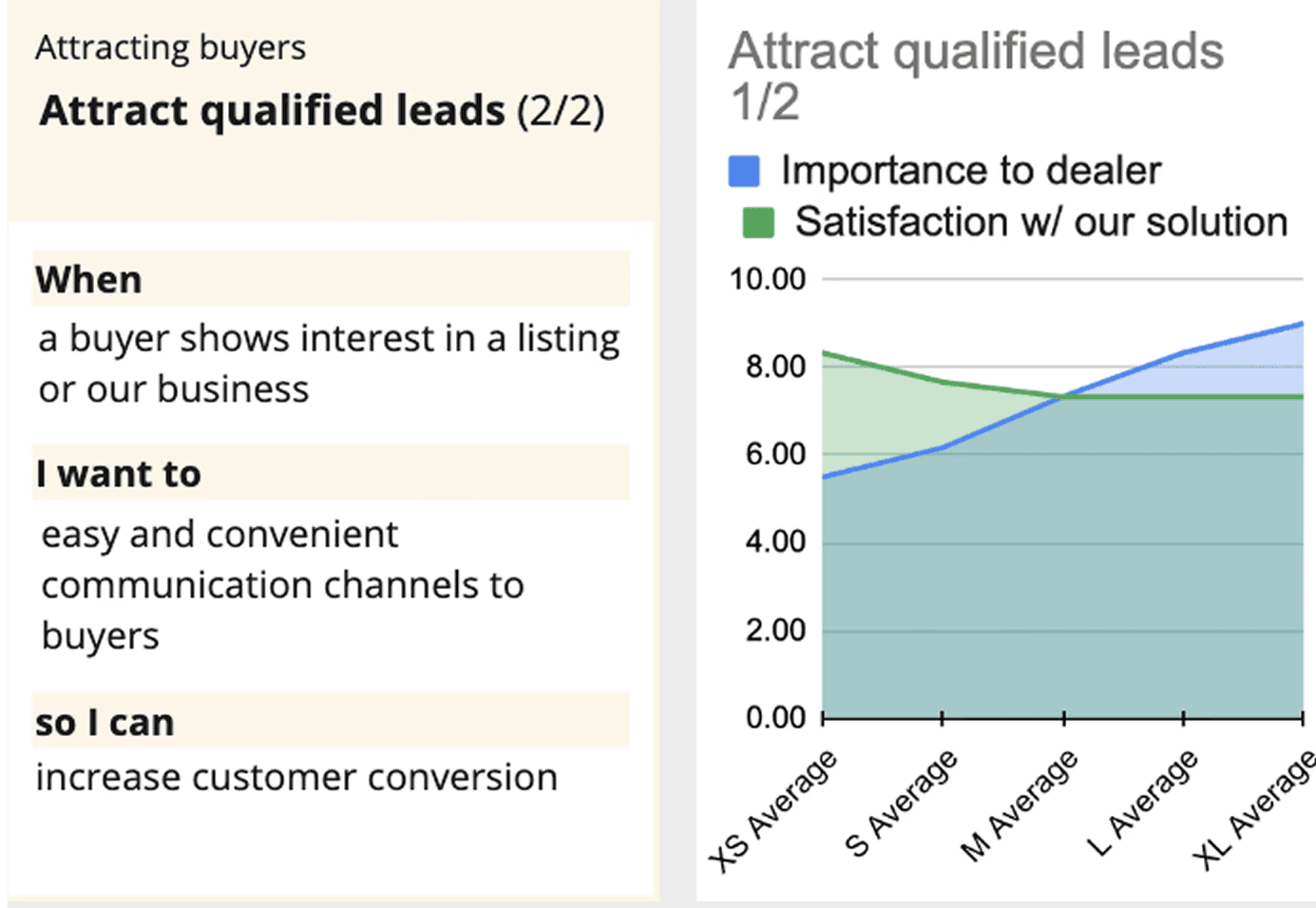
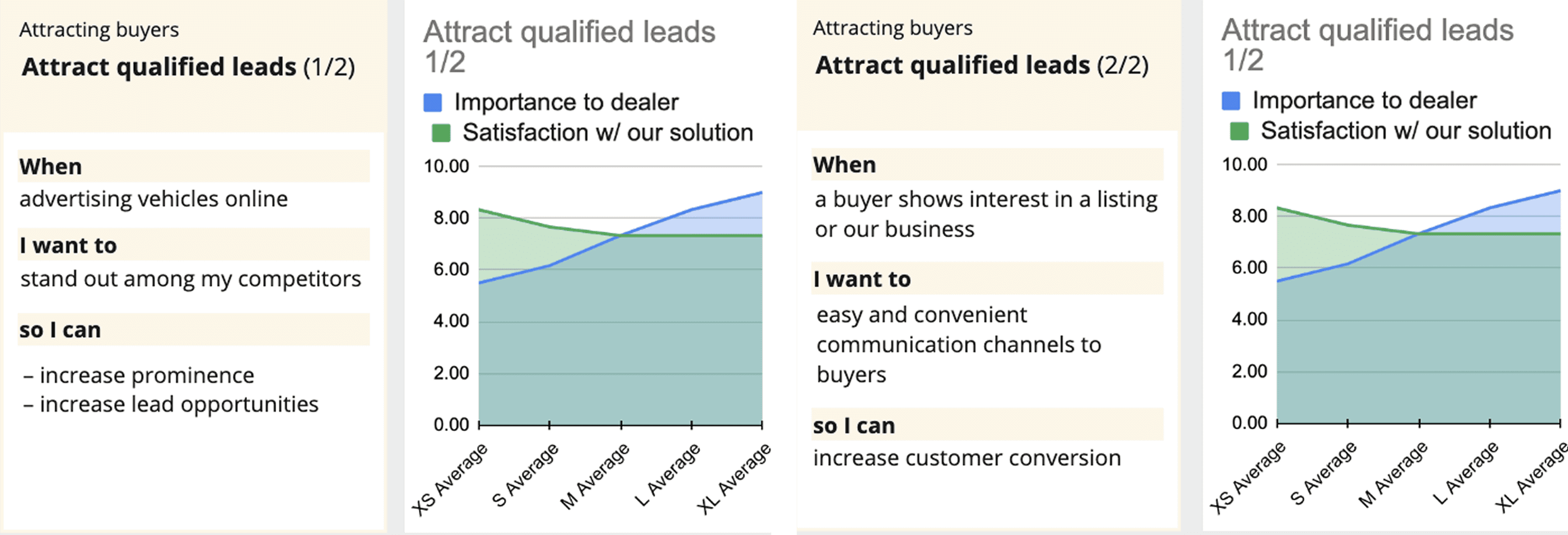
We began by identifying key findings from our research and reframing them as JTBD statements. These were then translated into survey questions, where dealers were asked to rate each job based on its importance and their level of satisfaction with our current solution. We also segmented responses by dealership size to uncover patterns across different business contexts.
The resulting chart visualizes the relationship between the importance of specific JTBDs and user satisfaction with our solution. This insight was used throughout the definition and ideation phases to help prioritize opportunities and guide solution development.
Solution
The new way of handling leads
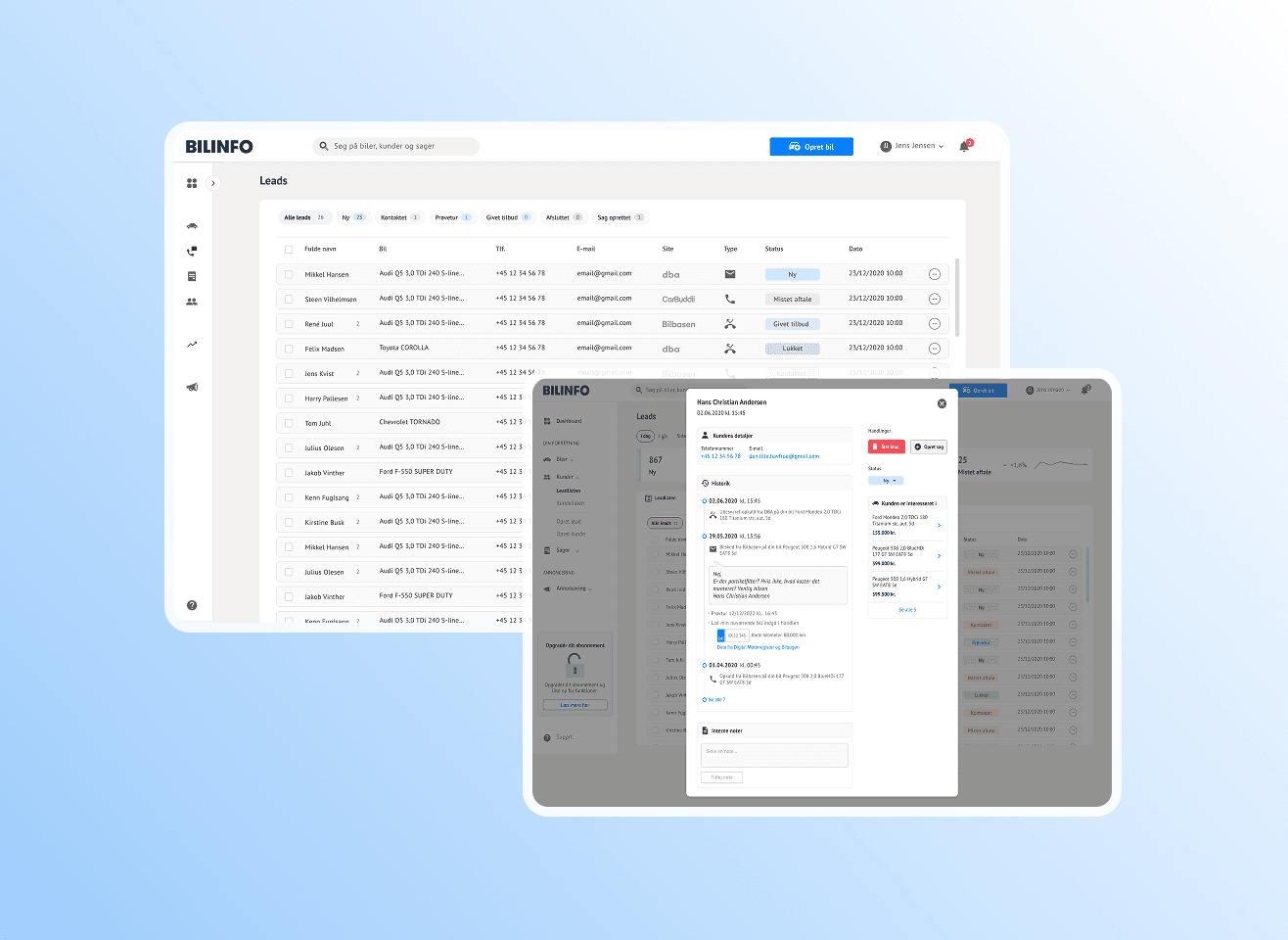
The updated lead management flow solves most of the problems gathered from our research with a much-improved UI. A clear sense of progress is created with persistent statistic tabs that display the number of new, closed and lost leads during the specific period.


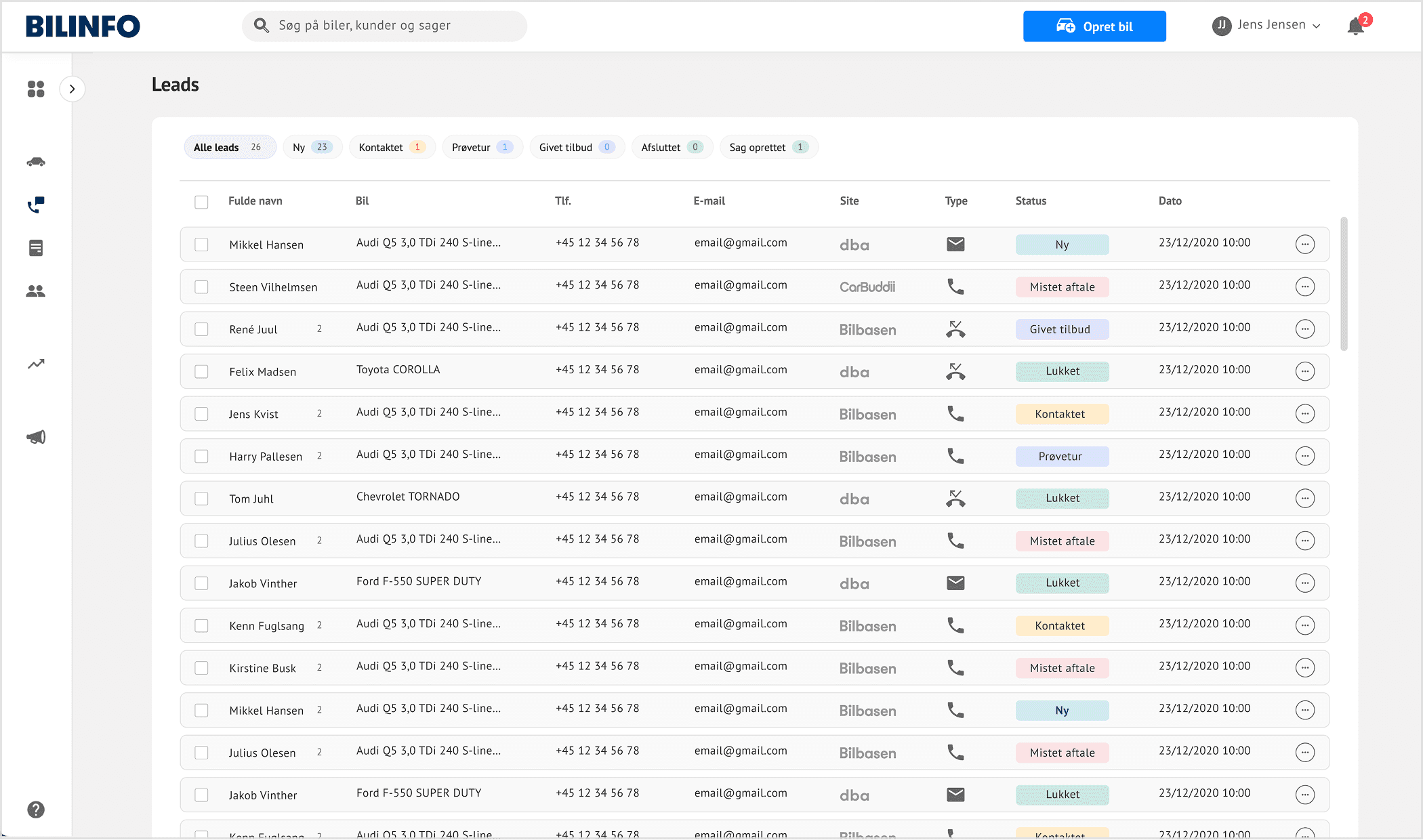
The leads from different channels such as bilbasen.dk, dba.dk as well as some of the leads coming from other channels are all automatically contained in the lead list. The lead list is a place where the dealer is presented with a simple UI that gives a clear overview of all the necessary information. Customer name, contact information, the source of the lead, type of lead (phone calls, lost phone calls, email, chat etc.) as well as simple labelling of a lead status that helps dealers keep track of their tasks and their sales process, are part of the lead list.
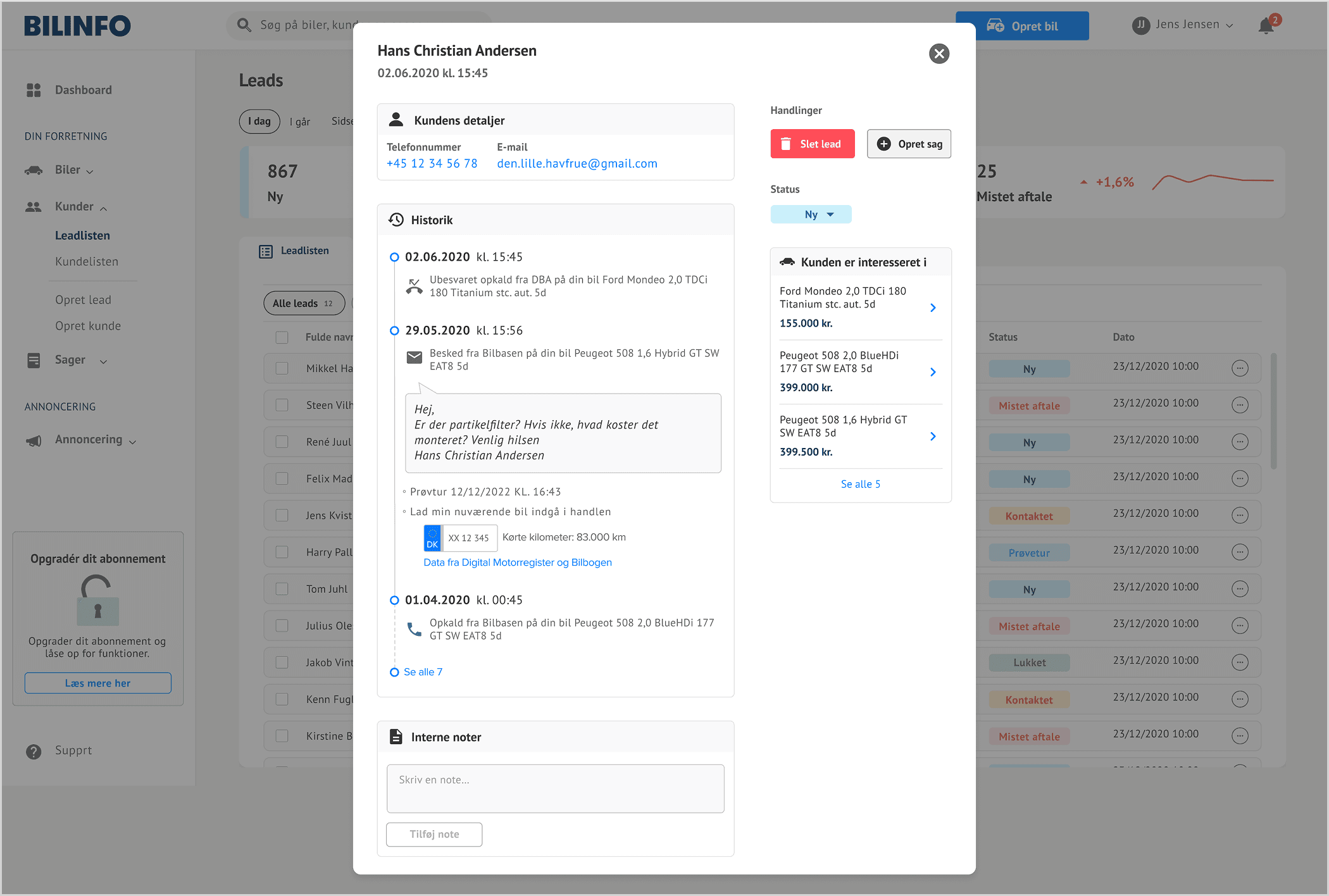
Each of the leads can be expanded into a detailed view where the dealer can see further information such as the history of all contact events that took place between the dealership and the customer, quick access to contact creation as well as of the internal sales notes created about a particular customer. Special attention was given to leads that include trade in cars where the deailed view of these leads include quick access to bilfakta (data from danish motor registration about the car) as well the estimated retail value of the car.
Impact
Impact and reflections
Within the first three months from the final release, we could measure the significant increase in dealers recovering missed calls leads (+54%), as well as we managed to increase the number of trade-in car deals (+8%).
A 54% improvement doesn’t come from new colors. It comes from understanding why users were frustrated and systematically fixing it. The new design made the product better and made the dealer faster — that’s the real win for long-term product health and end user.